

How to Make Biryani in 2026: A Home Cook’s Honest Guide. Learning how to make biryani in 2026 often begins with curiosity rather than confidence. Many people assume it is complicated, yet the dish rewards those who slow down and enjoy the process. Biryani has travelled through generations, kitchens and cultures changing slightly each time while keeping its soul intact. In today’s homes, it represents comfort as much as celebration. When you understand make biryani, you are not just following steps but creating something that feels personal and deeply satisfying.
WhatsApp Group Links
- Global Plates: Join Now
- The Cooking Club: Join Now
- Street Food Lovers: Join Now
- The Hungry Circle: Join Now
- Desi Tarka: Join Now
- Kitchen Doctor: Join Now
- Foodie Pie: Join Now
- Food: Join Now
- Only About Food: Join Now
- Food Lovers: Join Now
- Food Vlogs And Videos: Join Now
- Food Adda: Join Now
- Cock Point: Join Now
- Dry Fruits: Join Now
- Best Food: Join Now
Other WhatsApp Groups
- Fitness WhatsApp Group Links
- Gym WhatsApp Group Links
- PUBG UC WhatsApp Group Links
- PUBG WhatsApp Group Links
- BGMI WhatsApp Group Links
- 2000+ Reliable Pakistani Girls WhatsApp Group
- 1000+ Reliable Girls WhatsApp Group Link
- Yoga WhatsApp Group Links
- 3000+ Reliable UK Girls WhatsApp Groups
Ingredients That Shape How to Make Biryani
The quality of ingredients plays a quiet but powerful role in how to make biryani well. Aged basmati rice brings fragrance and structure, while fresh chicken, lamb or vegetables provide body and richness. Yoghurt softens and balances spices, preventing the dish from becoming heavy. Whole spices, rather than powders alone, release flavor gradually during cooking. Many home cooks have become more thoughtful about sourcing, which naturally improves results when learning how to make biryani from scratch.
Why Rice Preparation Matters in Making Biryani
Rice often decides the success or failure of making biryani. Washing removes excess starch while soaking prepares the grains to cook evenly. Parboiling the rice until it is just underdone allows it to finish cooking later without losing shape. This stage requires attention rather than speed. Slight firmness in the rice is not a mistake it is intentional. Understanding this detail changes how people approach how to make biryani with confidence rather than guesswork.
Marination and Patience
One overlooked secret of making biryani lies in marination time. Allowing meat or vegetables to rest in yoghurt, spices and aromatics creates depth that cannot be rushed. Chicken absorbs flavor quickly, while lamb benefits from longer marination. This step is not about complexity but about giving ingredients time to speak for themselves. In modern routines, marinating the night before has become common, making biryani easier without sacrificing flavor.
Layering: The Quiet Art Behind Making Biryani
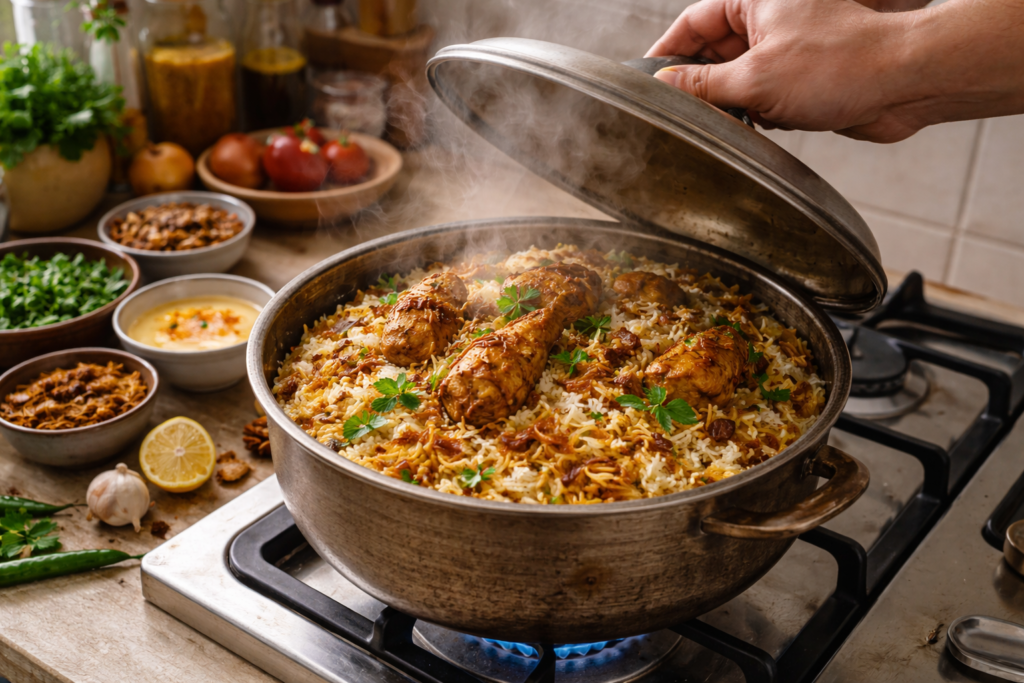
Layering is where how to make biryani becomes more art than recipe. Instead of mixing everything together, ingredients are placed carefully so flavors meet slowly. Protein forms the base, rice sits gently above and fried onions, herbs and saffron milk finish the layers. Nothing should feel rushed at this stage. Even spacing matters more than people realize. Once you grasp layering, how to make biryani starts to feel intuitive rather than technical.
Slow Cooking and Steam
The dum process defines traditional how to make biryani and teaches patience. Sealing the pot traps steam, allowing everything inside to cook evenly and absorb aroma. Low heat is essential, as high temperatures can burn the base before flavors develop. This stage fills the kitchen with a scent that signals something special is happening. Dum cooking turns preparation into anticipation, which is why it remains central to how to make biryani even today.
Common Missteps While Learning How to Make Biryani
Mistakes are part of learning how to make biryani and most are easy to avoid once recognised. Overcooking rice, adding too much liquid and stirring after layering can disrupt texture. Another common issue is skipping resting time after cooking, which affects moisture balance. Biryani improves when left untouched for a few minutes before serving. Paying attention to these details gradually sharpens your understanding of how to make biryani properly.
Serving with Care: Completing How to Make Biryani
Serving is the final act in how to make biryani and deserves the same care as cooking. The rice should be lifted gently rather than stirred, allowing layers to remain visible. Simple sides like raita or fresh salad offer contrast and balance. Garnishes add freshness without distraction. Biryani continues to appear at both everyday meals and special gatherings, reminding us that knowing how to make biryani is a skill that always feels worthwhile.

FAQs:
Q: Is making biryani suitable for home cooks with little experience?
A: Yes, making biryani is manageable for beginners who focus on timing and follow the process patiently.
Q: Which rice should I choose for biryani?
A: Basmati rice works best for biryani due to its aroma and firm texture.
Q: Can I prepare a meat free version?
A: Absolutely, how to make biryani adapts well to vegetables, paneer or plant based alternatives.
Q: How long does biryani usually take?
A: On average, how to make biryani takes about one to one and a half hours from start to finish.
Conclusion
Becoming comfortable with how to make biryani takes practice not perfection. Each attempt teaches something new, whether it is spice balance, timing or texture. The dish rewards attention rather than speed and becomes easier with familiarity. Biryani remains a reminder that good food is often about slowing down. Once you truly learn how to make biryani it becomes less of a challenge and more of a pleasure.
Disclaimer
This website lists public WhatsApp groups, including Food WhatsApp Group Links. We do not own or manage any of these groups.
You must follow each group’s rules and guidelines when you join. We do not control the content shared by members and are not responsible for it.
You join any Food WhatsApp Group Links at your own risk. We are not liable for any fraud, loss, or harm that may occur.
If you need assistance joining a group, contact us through our Contact Us page.

Pingback: Food WhatsApp Group Links